At a glance
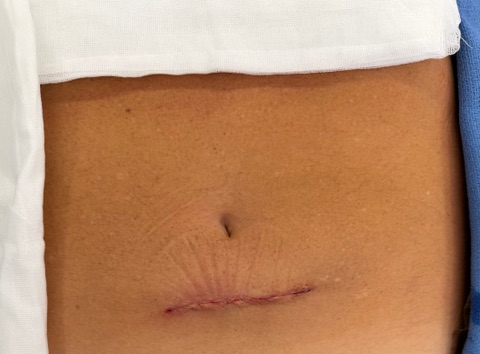
- What it is: A minimally invasive robotic operation performed through a single small skin incision using the da Vinci SP platform, instead of the four to six small incisions used for multiport robotic surgery.1,3
- Who it suits: Selected patients with localised prostate cancer where anatomy, prior surgery, and disease stage fit a single-access extraperitoneal approach.1,2,3
- Evidence: Meta-analyses report lower estimated blood loss, shorter hospital stay, and lower post-operative pain scores vs multiport RARP, with comparable continence, potency, margin, and biochemical recurrence outcomes at currently reported follow-up.1,2,4
Who is suitable?
SP robotic prostatectomy is most often chosen for:
- Men with localised prostate cancer who are suitable for radical prostatectomy (consistent with the EAU 2025 and AUA/SUO 2022/2024 guideline recommendations for men with approximately >10 years life expectancy) and whose anatomy is compatible with a single-access, extraperitoneal approach.1,2,19,20
- Men who have had previous abdominal surgery that makes entry through the peritoneal cavity more complex, where an extraperitoneal SP approach may avoid previous adhesions.5,6,23
- Men who particularly value a single small incision and measured return to usual activity, accepting that long-term SP-specific outcomes are still accumulating.1,2
SP is usually not the best choice for some extensive nodal-dissection templates (pooled SP experience has reported fewer lymph nodes retrieved than MP in one large series).24 Each recommendation is individualised after history, examination, and review of imaging and pathology.
How the operation is performed
- Anaesthesia and position. General anaesthesia. The patient is positioned supine, with a mild Trendelenburg tilt (much less steep than for multiport RARP).5
- Single incision. A suprapubic skin incision of approximately 3 to 3.5 cm is made just above the pubic bone.13 The 25 mm SP cannula is placed, and CO2 is used to open the extraperitoneal space in front of the bladder and prostate, without entering the peritoneal cavity.5,6
- Robotic docking and dissection. The da Vinci SP arm is docked. The articulating camera and three multi-jointed instruments are advanced through the single cannula. Dissection follows standard anatomical planes for cancer clearance and nerve preservation where appropriate.1,2,5
- Anastomosis. The bladder and urethra are sutured together over a urinary catheter.1,2
- Lymph node dissection, if indicated. Performed through the same access when part of the planned operation.1
- Specimen retrieval and closure. The prostate is removed through the same incision, which is then closed in layers.1,2
Operating time is similar to, or slightly longer than, a comparable multiport operation in experienced hands, with most of the difference concentrated in the surgeon's early learning curve.6,25
Risks and complications
The risks of SP robotic prostatectomy are the risks of any radical prostatectomy; published comparative data show no increase in major complication (Clavien-Dindo) rates over multiport RARP.1,2 These include bleeding, injury to adjacent structures, anastomotic leak or stricture, urinary incontinence, erectile dysfunction, cancer control issues, conversion to multiport or open surgery, and venous thromboembolism. Full counselling is documented before surgery.